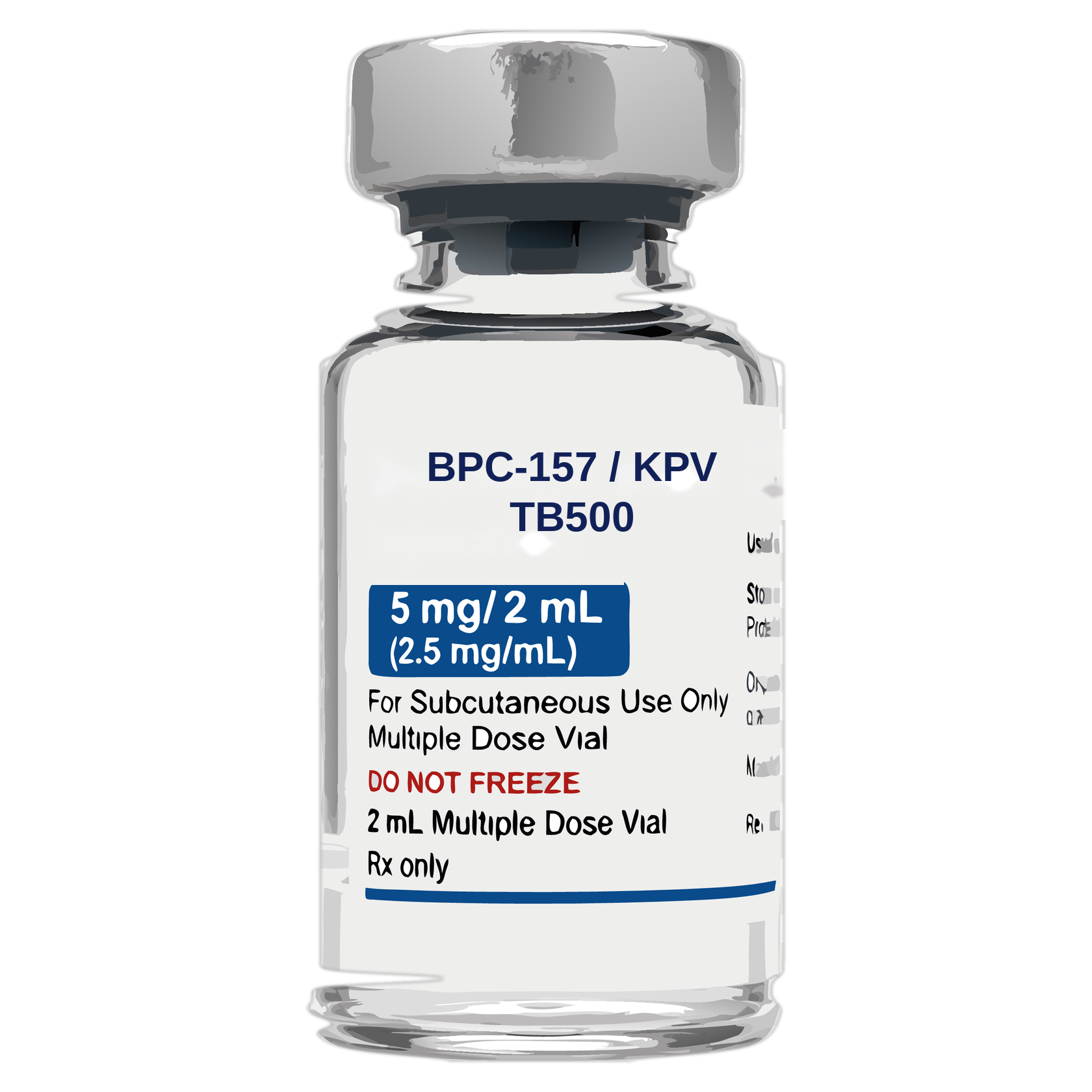
BPC-157 / KPV / TB-500
This combination adds KPV — a tripeptide fragment of alpha-MSH studied for anti-inflammatory signaling — to the BPC-157/TB-500 recovery pairing, targeting inflammation alongside tissue repair.
- Adds KPV's anti-inflammatory profile to BPC-157 and TB-500
- Studied for broader systemic recovery support
- Explored for inflammation modulation alongside tissue repair
No commitment · Cancel anytime · Physician evaluation required
About BPC-157 / KPV / TB-500
KPV (Lys-Pro-Val) is a tripeptide fragment derived from alpha-melanocyte-stimulating hormone (α-MSH), studied in preclinical research for anti-inflammatory effects, largely through modulation of NF-κB signaling — a central pathway in the body's inflammatory response. It's combined here with BPC-157 and TB-500, each studied separately for tissue-repair mechanisms (see their individual research summaries).
What the research shows — and its limits
All three components have research bases that are overwhelmingly preclinical (cell culture and animal models). KPV's anti-inflammatory signaling work is well-documented in laboratory settings but has not, to date, been validated in controlled human trials for general recovery or wellness use. The same caveat that applies to BPC-157 and TB-500 individually — limited human data relative to the animal literature — applies here as well, and the three-compound combination has not been studied together.
Regulatory note
As of mid-2026, the FDA's Pharmacy Compounding Advisory Committee has been reviewing several peptides — including BPC-157, KPV, and TB-500 — for potential inclusion on official compounding lists, which would clarify their regulatory status going forward.
Who it's for
This combination is considered by adults focused on recovery and inflammation support who want a broader-spectrum approach, understanding the evidence base for all three components remains early-stage.
How It's Administered
Typically administered as a subcutaneous injection, dosed and scheduled according to your physician's evaluation.
Safety & Considerations
Preclinical safety data for all three components has generally been favorable at studied doses, but none has the controlled human safety trial base of an FDA-approved medication. Your physician will discuss these considerations and review your health history during your evaluation.
Selected References
The following peer-reviewed sources informed the summary above. Evidence quality varies — some reflect large controlled human trials, others early-stage or animal research, as noted.
- Emerging Use of BPC-157 in Orthopaedic Sports Medicine: A Systematic Review
SAGE Journals, 2025 - TB-500 Peptide: Thymosin Beta-4 Healing Guide — FDA Pharmacy Compounding Advisory Committee review status
HealingMaps clinical summary, 2026