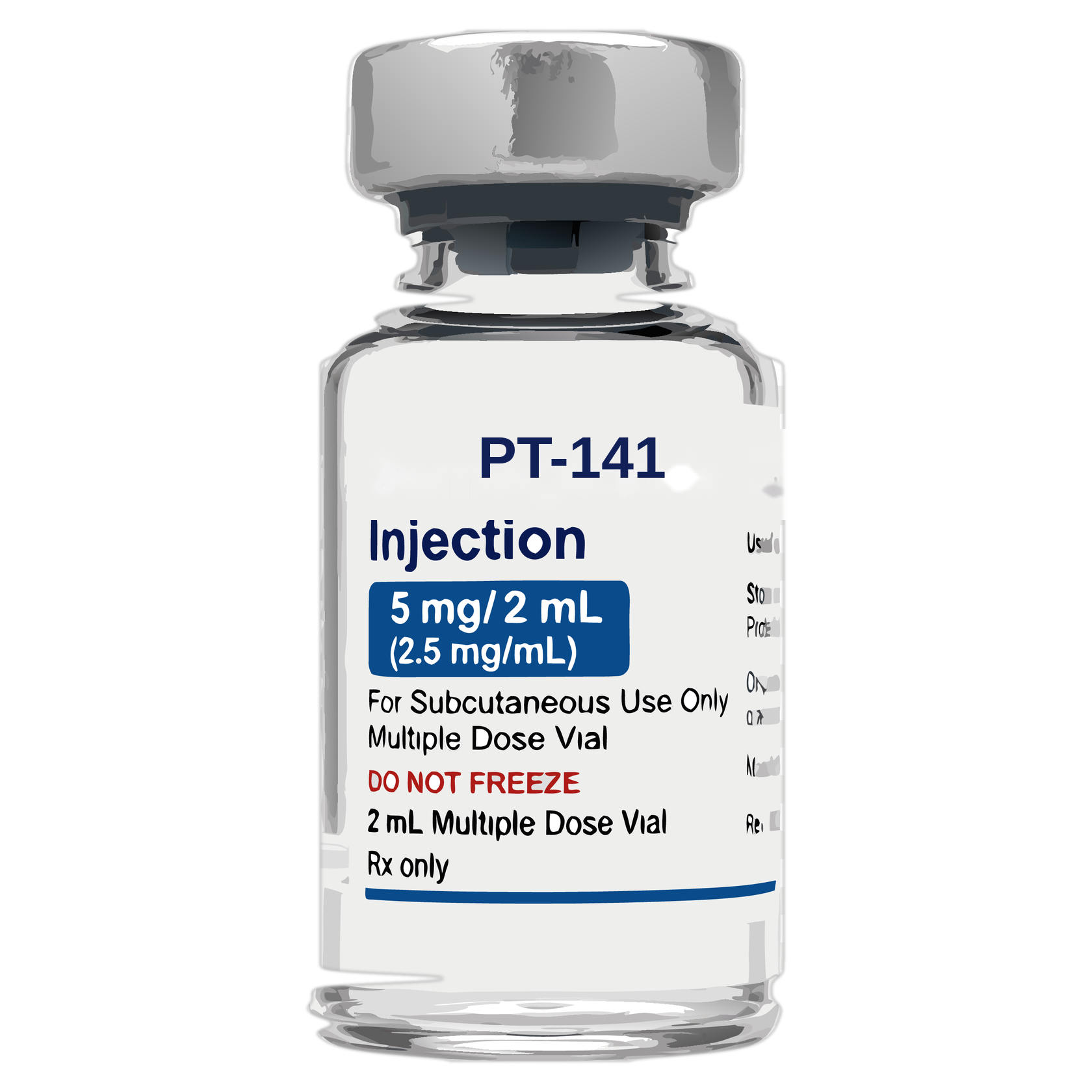
PT-141
PT-141, known generically as bremelanotide, is a melanocortin receptor agonist that acts on the central nervous system to influence sexual desire and arousal. It's one of the better-studied compounds in the peptide wellness category, with human clinical trial data supporting its mechanism and effects.
- Backed by FDA-approved Phase 3 clinical trial data
- Associated with increased sexual desire and arousal
- Works centrally (brain) rather than on blood flow alone
No commitment · Cancel anytime · Physician evaluation required
About PT-141
Bremelanotide received FDA approval in June 2019 as the first on-demand treatment for acquired, generalized hypoactive sexual desire disorder (HSDD) in premenopausal women. Unlike medications that act on blood flow, bremelanotide activates melanocortin-4 receptors (MC4R) in the brain, working through the neural pathways involved in sexual desire itself.
What the research shows
The approval was supported by the RECONNECT studies — two identical Phase 3, randomized, double-blind, placebo-controlled trials enrolling a combined 1,267 premenopausal women with HSDD. Bremelanotide 1.75mg, self-administered subcutaneously as needed, produced statistically significant improvements in sexual desire and reductions in related distress compared to placebo (P<0.001 on both measures). A companion long-term extension study supported an acceptable long-term safety profile.
An important distinction: the FDA approval is specifically for premenopausal women with HSDD. Use in men, and use outside this specific population, is considered off-label — supported by smaller, earlier-phase studies (including dose-finding studies in men with erectile dysfunction) rather than the same Phase 3 trial base. The compounded version dispensed through telehealth programs like this one is also a different product from the FDA-approved finished drug — same active mechanism, but not the identical formulation, and not FDA-approved as compounded.
Who it's for
PT-141 is considered by adults interested in support for sexual desire and arousal, with the strongest clinical evidence base specifically in premenopausal women; your physician will discuss what the evidence does and doesn't say for your specific situation during your evaluation.
How It's Administered
PT-141 is typically administered as a subcutaneous injection, timed in advance of anticipated activity per your physician's guidance, consistent with how it was dosed in the pivotal clinical trials.
Your physician will determine an appropriate starting protocol during your evaluation based on your health history and goals.
Safety & Considerations
The RECONNECT trials documented the most common side effects as nausea, flushing, and headache, generally most pronounced with early doses and diminishing with continued use. A transient increase in blood pressure has also been observed, which is why a physician evaluation of cardiovascular history is part of determining candidacy.
This program is not appropriate for everyone — your physician will review your health history, including cardiovascular considerations, during your evaluation.
Selected References
The following peer-reviewed sources informed the summary above. Evidence quality varies — some reflect large controlled human trials, others early-stage or animal research, as noted.
- Bremelanotide for the Treatment of Hypoactive Sexual Desire Disorder: Two Randomized Phase 3 Trials
PubMed / Obstetrics & Gynecology, 2019 - Long-Term Safety and Efficacy of Bremelanotide for Hypoactive Sexual Desire Disorder
PubMed / Obstetrics & Gynecology, 2019