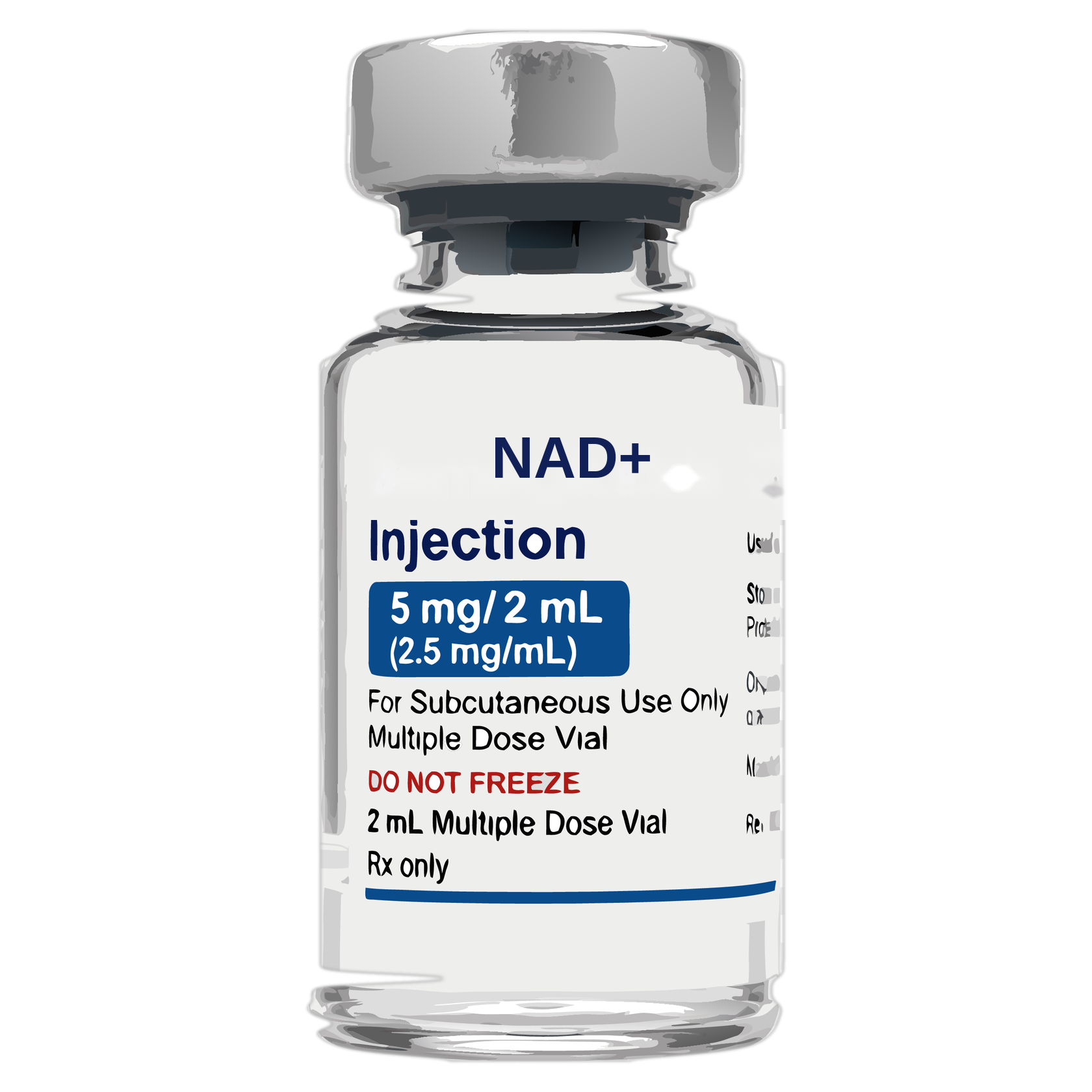
NAD+
NAD+ (nicotinamide adenine dinucleotide) is a coenzyme found in every cell in the body, central to energy production and DNA repair. NAD+ levels are understood to decline with age, which has driven substantial clinical research interest in supplementation.
- Supports mitochondrial energy production
- May support cellular repair processes
- Associated with healthy metabolic function
No commitment · Cancel anytime · Physician evaluation required
About NAD+
NAD+ is a coenzyme required for mitochondrial ATP production, DNA repair, and cell signaling. A well-documented age-related decline in NAD+ levels has made it a widely studied target in metabolic and longevity research over the past decade.
Human clinical evidence is more developed for NAD+ than for many peptides offered as wellness therapies — multiple systematic reviews of randomized controlled trials have been published, though results across studies are mixed and effect sizes are generally modest.
What the research shows
A 2023 systematic review of randomized clinical trials evaluating NAD/NADH supplementation found it was generally safe, with associated improvements in some quality-of-life and metabolic markers, though the authors noted small sample sizes and inconsistent dosing across studies limit strong conclusions. Separate meta-analyses have examined effects on weight-related hormones and lipid/glucose metabolism, again with mixed but generally favorable safety signals.
Who it's for
NAD+ therapy is typically considered by adults interested in metabolic and cellular energy support as part of a broader wellness or longevity-focused program, often alongside other physician-directed care.
How It's Administered
NAD+ is administered as a subcutaneous or intramuscular injection on a physician-directed schedule. Your prescribing physician determines dosing and frequency based on your health history and program goals during your evaluation — this is not a fixed, one-size-fits-all protocol.
Programs typically begin with a loading phase followed by a maintenance schedule, refined based on how you respond.
Safety & Considerations
Clinical trial data suggests NAD+/NADH is generally well tolerated. The most commonly reported effects across studies include mild muscle discomfort, transient fatigue, sleep disturbance, and headache — none rising to serious safety concerns in the reviewed trials.
As with any injectable therapy, appropriateness depends on your individual health history. Your physician will review contraindications, current medications, and health conditions during your evaluation. Not all applicants will qualify.
Selected References
The following peer-reviewed sources informed the summary above. Evidence quality varies — some reflect large controlled human trials, others early-stage or animal research, as noted.
- Evaluation of safety and effectiveness of NAD in different clinical conditions: a systematic review
PubMed / American Journal of Physiology — Endocrinology and Metabolism, 2024 - Dietary Supplementation With NAD+-Boosting Compounds in Humans: Current Knowledge and Future Directions
PMC (National Institutes of Health) - The effects of NAD+ precursor supplementation on weight loss and related hormones: a systematic review and meta-regression
PMC (National Institutes of Health)