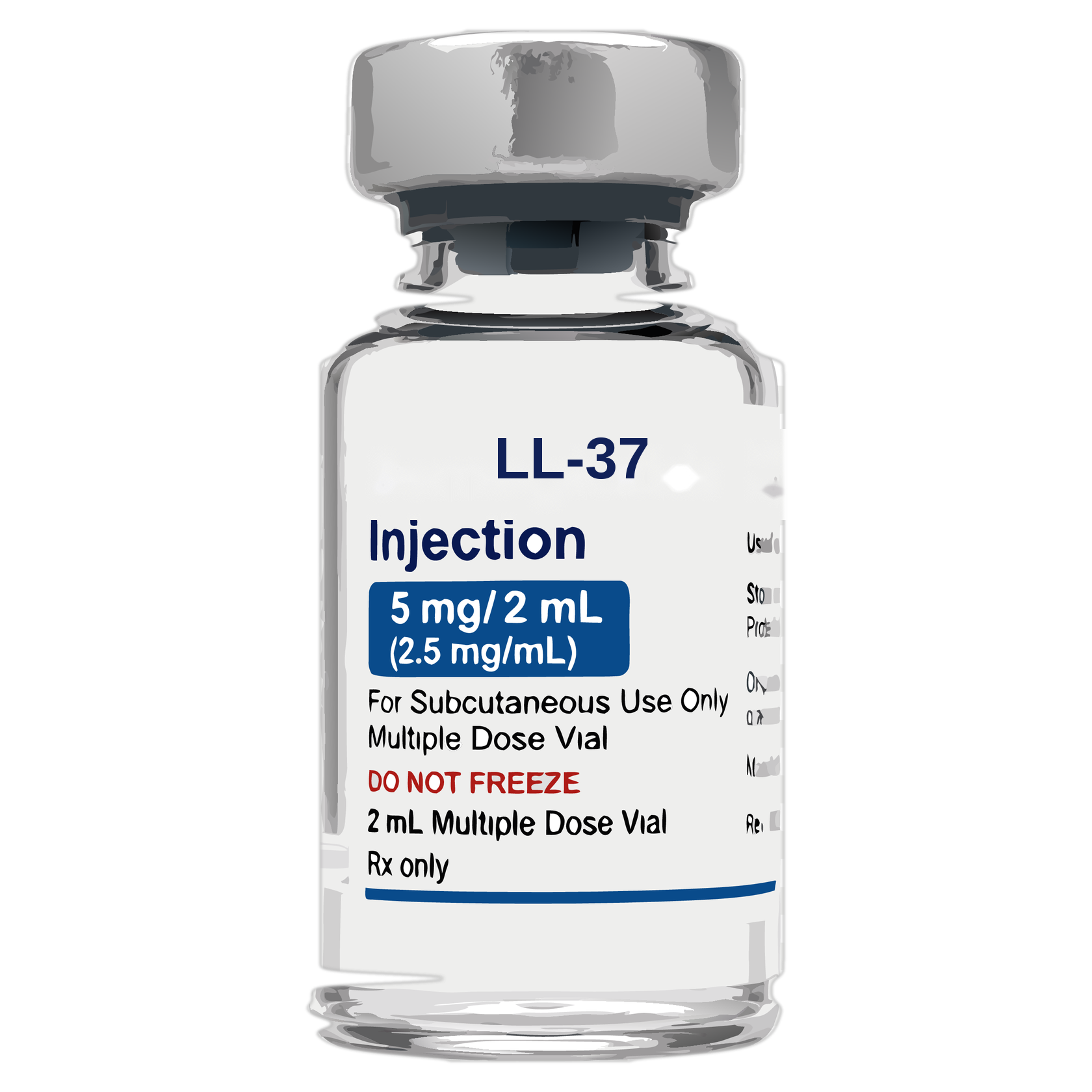
LL-37
LL-37 is the active fragment of hCAP18, the only cathelicidin antimicrobial peptide produced naturally in humans, studied for its role in innate immune defense and wound-site antimicrobial activity.
- The only human cathelicidin antimicrobial peptide
- Studied for innate immune signaling
- Researched for wound-related antimicrobial activity
No commitment · Cancel anytime · Physician evaluation required
About LL-37
LL-37 is a naturally occurring host-defense peptide, cleaved from a precursor protein (hCAP18) and expressed in white blood cells and epithelial tissue. It has direct antimicrobial activity against bacteria and fungi, and also influences immune cell signaling and wound-related cell migration.
A balanced look at the research
Most LL-37 research is laboratory-based — cell culture and in vitro antimicrobial assays, rather than controlled human clinical trials for therapeutic use. It's also worth being direct about some complexity in the literature: LL-37 is a genuinely dual-natured molecule in the research record. Beyond its antimicrobial and wound-signaling roles, some studies have found LL-37 associated with less favorable processes at pathological concentrations — including research describing a role in promoting cell migration in breast cancer cell lines, and its presence in atherosclerotic plaques where it was linked to vascular smooth muscle cell death. These findings don't establish that therapeutic dosing causes harm, but they reflect a molecule whose full biology in disease contexts is still being worked out, and is part of why LL-37 sits in an earlier evidence tier than several other options here.
Who it's for
LL-37 is generally considered by adults interested in immune-support research as part of a broader wellness program.
How It's Administered
LL-37 is typically administered as a subcutaneous injection on a schedule determined by your physician during your evaluation.
Safety & Considerations
Given the mixed research signals described above, physician oversight matters here more than for some other peptides. Your physician will review your full health history — including any personal or family history of cancer or cardiovascular disease — during your evaluation, and this program is not appropriate for everyone.
Selected References
The following peer-reviewed sources informed the summary above. Evidence quality varies — some reflect large controlled human trials, others early-stage or animal research, as noted.
- Human antimicrobial protein hCAP18/LL-37 promotes a metastatic phenotype in breast cancer
PMC (National Institutes of Health) - Human antimicrobial peptide LL-37 is present in atherosclerotic plaques and induces death of vascular smooth muscle cells
PMC (National Institutes of Health)