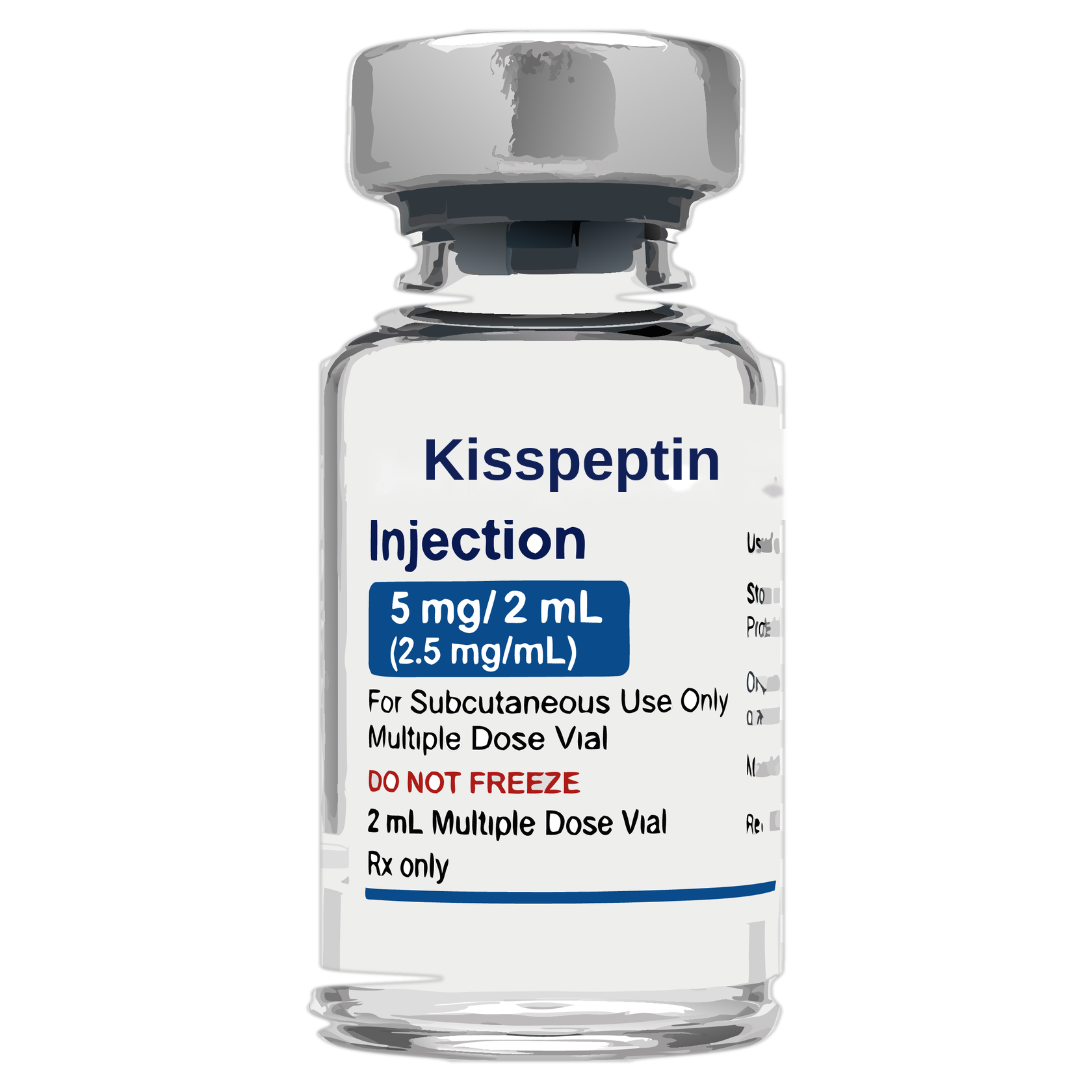
Kisspeptin
Kisspeptin is a naturally occurring neuropeptide that sits upstream of GnRH in the reproductive hormone cascade, with an established and growing role in reproductive endocrinology research, including as an ovulation trigger in fertility treatment.
- A master regulator of the reproductive hormone axis
- Studied as an ovulation trigger in fertility research
- Explored for hypothalamic amenorrhea and low libido support
No commitment · Cancel anytime · Physician evaluation required
About Kisspeptin
Kisspeptin (the KISS1 gene product) is a key upstream regulator of the hypothalamic-pituitary-gonadal axis, triggering GnRH release that in turn drives LH, FSH, and downstream sex hormone production. Its central role in puberty onset and reproductive function is well established in endocrinology.
What the research shows
Kisspeptin has moved further into clinical application than many peptides in this catalog: kisspeptin-based agonists have been studied and used clinically as an ovulation trigger in IVF protocols, an application with real published clinical research behind it, particularly as an alternative to hCG trigger shots for patients at risk of ovarian hyperstimulation syndrome. It's also being researched for conditions like hypothalamic amenorrhea. Broader wellness applications — for libido or general hormonal support outside these specific reproductive-medicine contexts — have a thinner direct evidence base.
Who it's for
Kisspeptin is considered both in specific reproductive-medicine contexts and, more generally, by adults interested in hormonal axis support as part of a broader wellness program.
How It's Administered
Kisspeptin is typically administered as a subcutaneous injection. Your physician will determine an appropriate protocol during your evaluation based on your specific goals.
Safety & Considerations
In fertility-medicine research contexts, kisspeptin has generally been well tolerated. Your physician will review your full health history during your evaluation, and this program is not appropriate for everyone.
Selected References
The following peer-reviewed sources informed the summary above. Evidence quality varies — some reflect large controlled human trials, others early-stage or animal research, as noted.