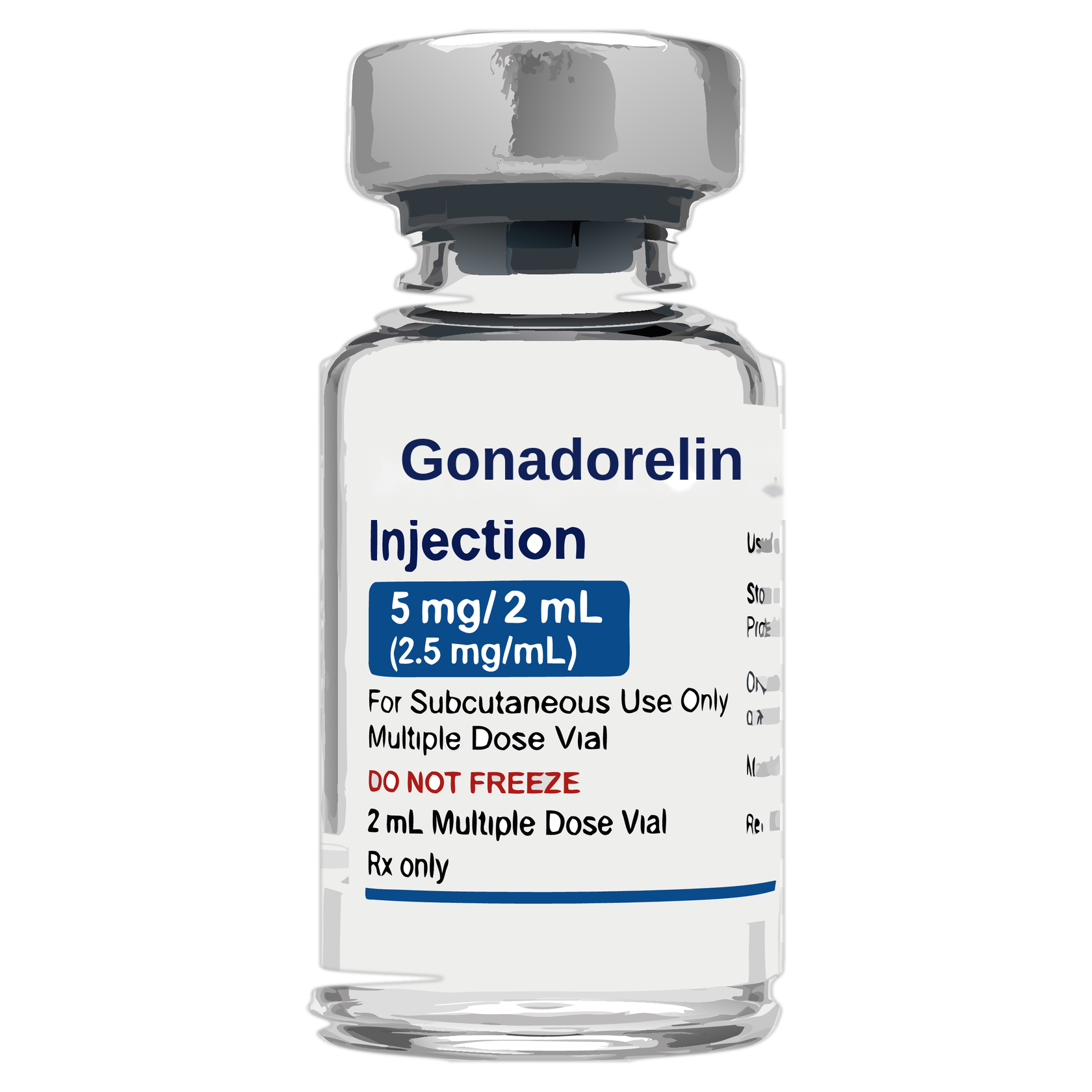
Gonadorelin
Gonadorelin is a synthetic version of gonadotropin-releasing hormone (GnRH), the hypothalamic hormone that signals the pituitary to produce LH and FSH. It has decades of history as a diagnostic agent and, in pulsatile form, as a fertility treatment.
- A synthetic GnRH studied for natural hormone production pathways
- Well-established diagnostic and pulsatile-therapy history
- Often used alongside TRT protocols to support the HPG axis
No commitment · Cancel anytime · Physician evaluation required
About Gonadorelin
Gonadorelin mimics natural GnRH, prompting the pituitary to release luteinizing hormone (LH) and follicle-stimulating hormone (FSH), which in turn drive testosterone production (via testicular Leydig cells) and support sperm production (via Sertoli cells).
What the research shows
Pulsatile GnRH therapy has a well-established evidence base for treating congenital hypogonadotropic hypogonadism (CHH) and inducing fertility in that population, summarized in consensus guidelines published in Nature Reviews Endocrinology (2015) and Endocrine Reviews (2019). Its use as an adjunct during testosterone replacement therapy — to preserve fertility and testicular volume by maintaining LH/FSH signaling — is a common off-label application, but current reviews note the evidence specifically supporting gonadorelin (as opposed to hCG or other approaches) for this exact purpose is still developing.
Who it's for
Gonadorelin is often considered by men on testosterone therapy who want to help preserve natural testicular function and fertility potential, and by patients being evaluated for hypothalamic-pituitary-gonadal axis function.
How It's Administered
Gonadorelin is typically administered as small, frequent subcutaneous injections to mimic the body's natural pulsatile GnRH release pattern. Your physician will determine an appropriate protocol during your evaluation, especially if used alongside testosterone therapy.
Safety & Considerations
Gonadorelin has a long history of diagnostic use with a well-characterized safety profile; the most common reported effects are mild injection site reactions and, transiently, headache or flushing.
Your physician will review your health history during your evaluation. Not all applicants will qualify.
Selected References
The following peer-reviewed sources informed the summary above. Evidence quality varies — some reflect large controlled human trials, others early-stage or animal research, as noted.
- Boehm U, et al. European Consensus Statement on congenital hypogonadotropic hypogonadism
Nature Reviews Endocrinology, 2015